Settling In

It has been 105 days since my cohort and I arrived in Ghana! There are eleven education volunteers in my cohort, and to begin this overdue update, I want to recall my emotions when we first departed for Ghana. Prior to departure, we underwent a one-day onboarding session in Philadelphia. At the end of the onboarding, the woman in charge told us, "If you have any second thoughts about going, you should let us know, and we will send you back home." I sat there, filled with fear because I did have reservations about going. I was so nervous on the bus to JFK airport that I felt nauseous. However, I told myself that if I made it to Ghana, eventually, I would look back and be happy I had boarded the plane. Here I am now, looking back, and feeling very happy that I got on the plane.
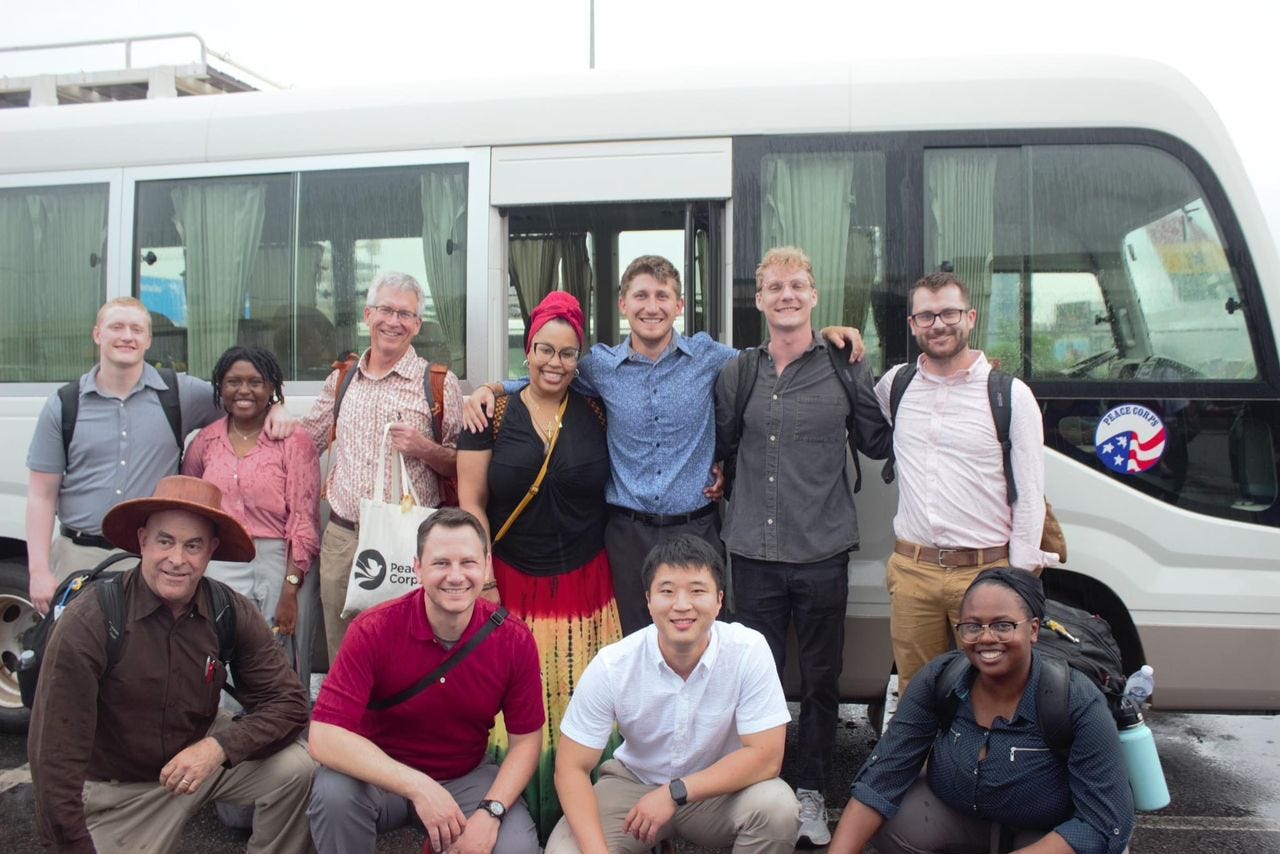
When we initially arrived in Ghana, we were warmly welcomed by numerous new faces from the Peace Corps (PC) Ghana staff and current Peace Corps Volunteers (PCVs). These staff members and PCVs would go on to become our close friends in the following months. During the first ten days, we stayed at the hotel, completing paperwork and participating in orientation sessions. As a cohort, we spent almost the entire day together, providing us with an opportunity to quickly form friendships. Before dinner, many of us would play football (soccer), frisbee, or go on short hikes. In the evenings, we played card games, watched movies on a projector and on the last night of our hotel stay, we celebrated with a talent show.
The following morning, we hit the road, heading to our homestay community, Abonse. A homestay community is the town where we all reside during our 12 weeks of training. Families in Abonse offered us rooms in their homes to stay in and adopted us into their families. They assisted us in adapting to the local culture and taught us how to perform basic daily tasks, such as fetching water, sweeping with local brooms, hand washing clothes, and more.
Abonse is a small rural town located in the Eastern region of Ghana, nestled amidst a beautiful green hillside. Upon our arrival, we were warmly welcomed by our homestay fathers and mothers at the local Presbyterian church. I have never felt more welcomed in my life. On the way from the church to my new home, I was greeted by many community members, all offering the heartfelt words, "you are welcome."
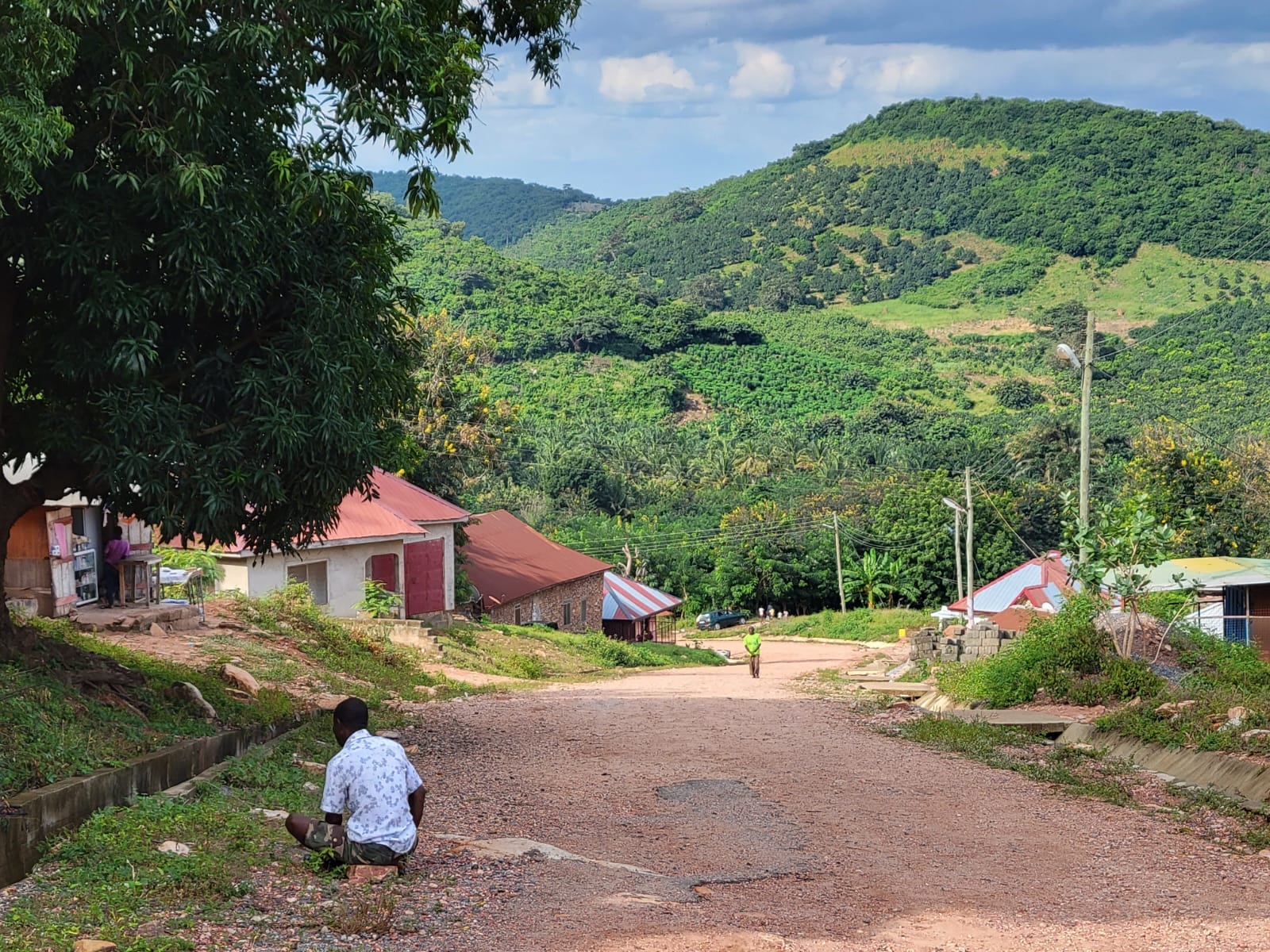
After arriving home, I quickly realized that I had joined a very large family. My homestay parents have nine children and a host of grandchildren, many of whom live in the same housing compound as me or nearby. Additionally, there are numerous goats, chickens, cats, and dogs that reside outside the home.
On the first night I arrived, my father gave me my local name, "Kwame Darko," and from that point onward, everyone in Abonse called me by that name. Kwame is a Twi day name, and all boys born on a Saturday are given this name and Darko is the family name of my host family.
During homestay, I would wake up around 5:00 am to the sound of numerous roosters. I would then proceed with my morning chores, have breakfast, and by 7:30 am, I would head off for training. Our training sessions typically lasted until around 5:00 pm every weekday. On the weekends, we frequently had various activities scheduled for Saturdays, but Sundays were our designated rest days. Training can be categorized into three main areas: education training, seminars, and language lessons. With the exception of seminars, most of our training took place in Abonse.
Education training involved a lot of hands-on work where we learned about the Ghanaian school curriculum, classroom management, and lesson planning. Seminars, on the other hand, covered a variety of subjects such as safety, health, transportation, and culture and were often held on the same day.
Language lessons were an almost daily occurrence with my language tutor, Fuzzy. I, along with two others, learned Dagbani, a language spoken in the northeastern part of Ghana and the northern part of Togo. Training was challenging, not necessarily due to the complexity of the subject matter, but because of the sheer volume of information and activities. I often found myself drained of energy, simply trying to make it through the day
The most demanding two weeks of training were during practicum. During this period, we visited nearby junior high schools to teach lessons. In the first week, I taught math, and in the second week, I taught science. Each day, I conducted lessons for the 7th and 8th-grade classes while being observed by other teachers and Peace Corps staff, who would later provide feedback. After concluding my teaching for the day, I would return to Abonse for two hours of language lessons. Once my language lessons were complete, I would return home to have dinner and prepare math/science lesson plans for the next day. By the time I finished, it was late, and I was exhausted. As physically, mentally, and emotionally taxing as practicum was, it seemed to pass by in a flash. I can distinctly recall the days leading up to practicum, thinking, "These next two weeks will be the most challenging part of training." Then, before I knew it, practicum was over.
Homestay took a toll on me in various ways – sleep deprivation, illness, and sheer fatigue from training. Each day felt incredibly long, yet at the same time, the 12 weeks seemed to fly by. During homestay, I made several attempts to write a blog post, but each time, I lacked the energy to put my thoughts into words or process my experiences. Looking back, I am most grateful for the people I had the privilege of being with. The Peace Corps (PC) staff, my cohort, and my host family were all truly wonderful, and the connections I forged with each individual were unique and unlike any relationships I had formed before.
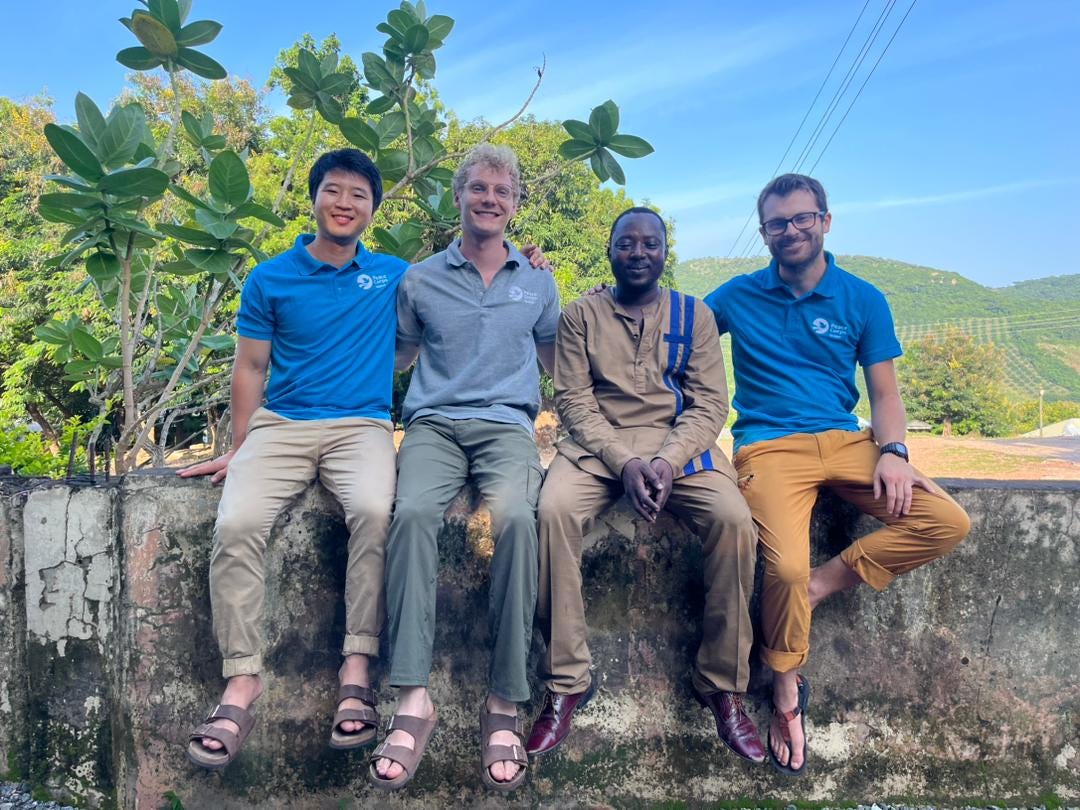
Almost all PC Ghana staff members are Ghanaian, and many of them resided with us in Abonse during training. This gave us an invaluable opportunity to connect with Ghanaians who were familiar with Americans and were there to provide us with support. All of the staff members were fantastic, eager to impart knowledge about their culture, and equally eager to get to know each of us individually. Going through PC training was an experience that fostered incredible friendships within our cohort. My cohort was relatively small, consisting of just 11 people, but I believe this size brought us closer together. We all encountered numerous shared challenges and celebrated victories together. However, each of us also faced our own unique trials, and supporting one another through these challenges united us even further.
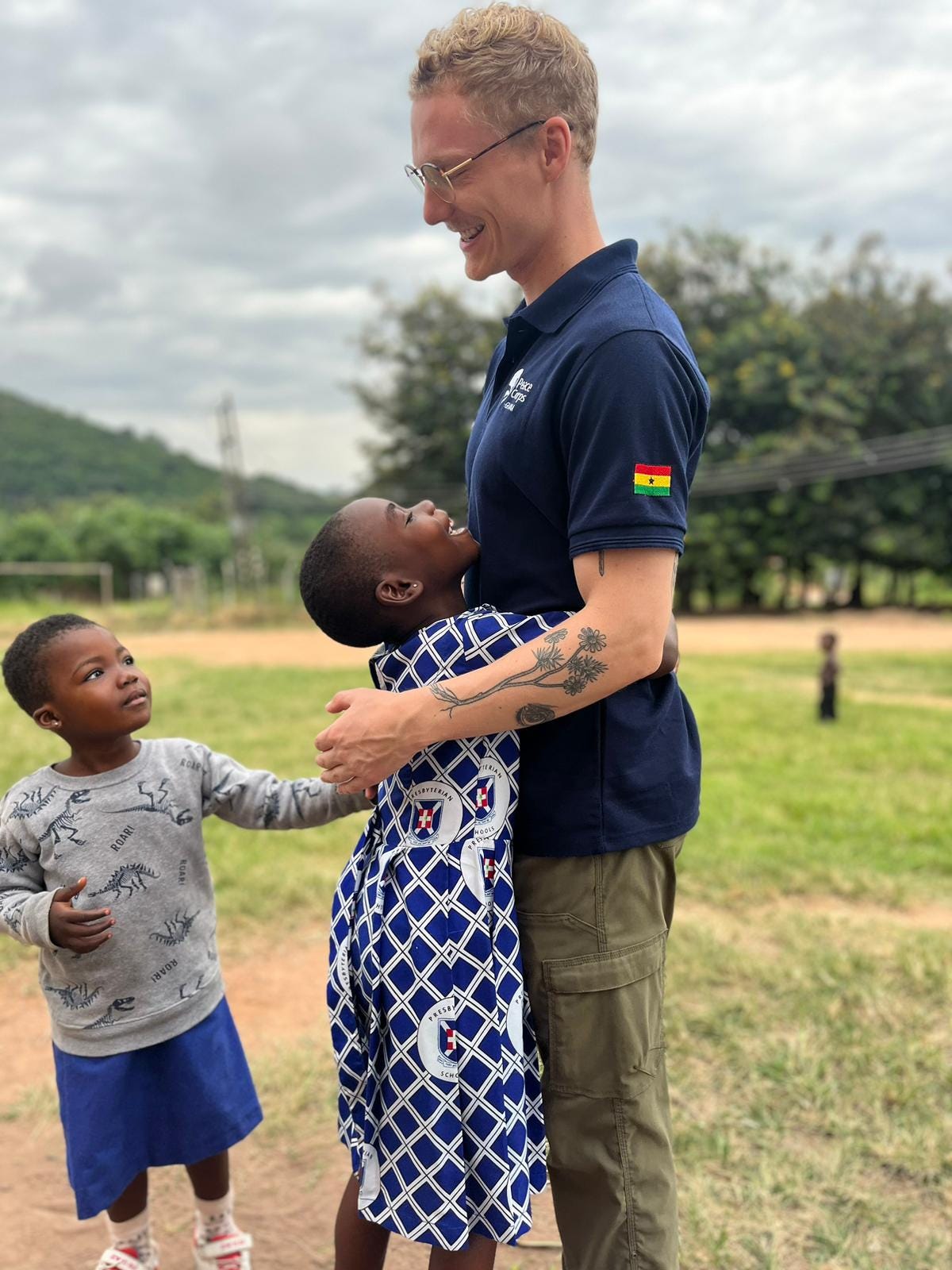
Some of the most impactful connections I formed were with my host family. Despite language barriers with my host mother and father, they treated me like a family member. They were constantly concerned about my well-being and made continuous efforts to teach me their local language, which was a dialect of Twi. In the housing compound where we lived, there were three young grandchildren who made my days in Abonse exceptionally special. Every day when I returned from my training sessions, they would run to greet me with hugs and insist on helping me carry my backpack and any other items I was holding. During my free time, we played games together. When I did my laundry, the three of them would kindly inform me that I was doing it wrong and then proceed to show me the correct way to hand wash my clothes.
The family member I connected with the most was a 13-year-old boy who shared my local name, Kwame Darko. Kwame was a bright 7th grader, always eager to learn about everything. Most evenings, we spent time together on the porch, engaging in discussions about mathematics, science, language, American and Ghanaian cultural differences, geography, and a myriad of other subjects. We confided in each other about our respective challenges, and through him, I gained a better understanding of what life was like for a Ghanaian boy living in a rural community. I learned about his sources of happiness and of sadness, and how he coped with the difficulties he encountered.
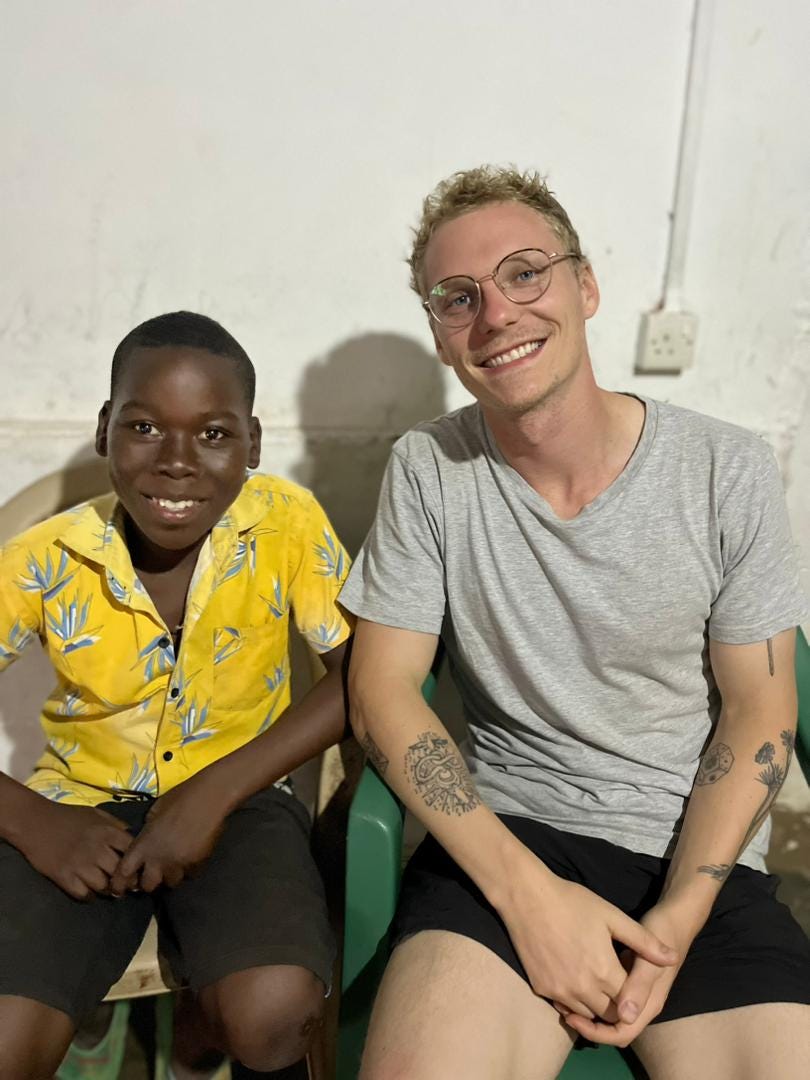
As we completed our training and our time in Abonse was coming to an end, I experienced a mix of bittersweet emotions. I was undeniably saddened by the prospect of leaving behind my friends and host family. Given the challenges of travel in Ghana, I understood that it might be the last time I'd see some of them. While I will have opportunities to reunite with my cohort and PC staff members a few times a year, I am not certain if I will be able to return to Abonse. Nonetheless, I was excited to transition to the next stage of volunteering and eager to begin my teaching assignment.
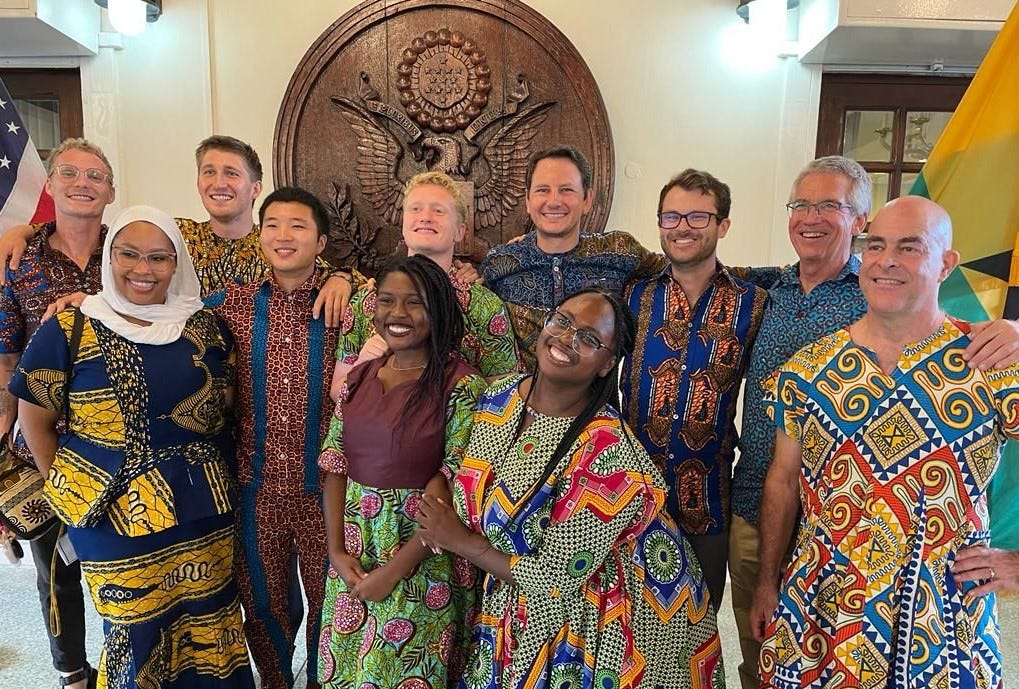
During our last week in Abonse, my cohort and I all took a language test and successfully passed! On August 24th, we had the privilege of visiting the U.S. ambassador's residence where we were officially sworn in as Peace Corps Volunteers. Following the swearing-in ceremony, we reunited with our host families at our training center and celebrated together. The next morning, I said goodbye to many of the community members in Abonse and departed for my new site, where I will spend the next two years: Tibung.
Located in the Northern region of Ghana, Tibung is a rural community characterized by agriculture as its primary occupation. While many people raise livestock such as sheep, goats, cattle, chickens, and guinea fowl, farming plays a central role with crops like rice, groundnut, pepper, and yam being cultivated. Depending on who you ask, Tibung has a population ranging from 1,000 to 4,000 people. I have been residing here for nearly a month now and have been settling in quite well.


I live in the teacher compound along with some of the Ghanaian teachers. While my home does have electricity, it is unstable, often experiencing daily outages lasting from a few minutes to several hours. None of the houses in Tibung have running water; instead, the community relies on communal water taps where residents fetch water. Typically, it is the women and children who perform this task. The water taps only flow twice a week, so I use two large barrels to store water. Other teachers also have homes in the regional capital, Tamale. Given that Tamale is about an hour-and-a-half away, most teachers either commute or stay in Tamale during the weekends.
Compared to Abonse, the amount of English spoken in Tibung is lower. My interactions with most community members occur in Dagbani, although my Dagbani skills need significant improvement before I can engage in real conversations. The nearest PC volunteer to me is my friend, Nathan, who resides in a community just five miles away. This proximity is relatively close for volunteers in Ghana, allowing us to visit each other frequently.
Upon my arrival, the school term was nearly over, but I was fortunate to have the opportunity to teach a few impromptu classes and get to know the students. I have developed good relationships with some of the students, and they visit my home daily for lessons or simply to socialize. The students' English proficiency levels vary, but often, to communicate, I must use a blend of English and Dagbani. I view this as a beneficial challenge, as it motivates me to improve my Dagbani language skills while also giving the students a chance to practice English.
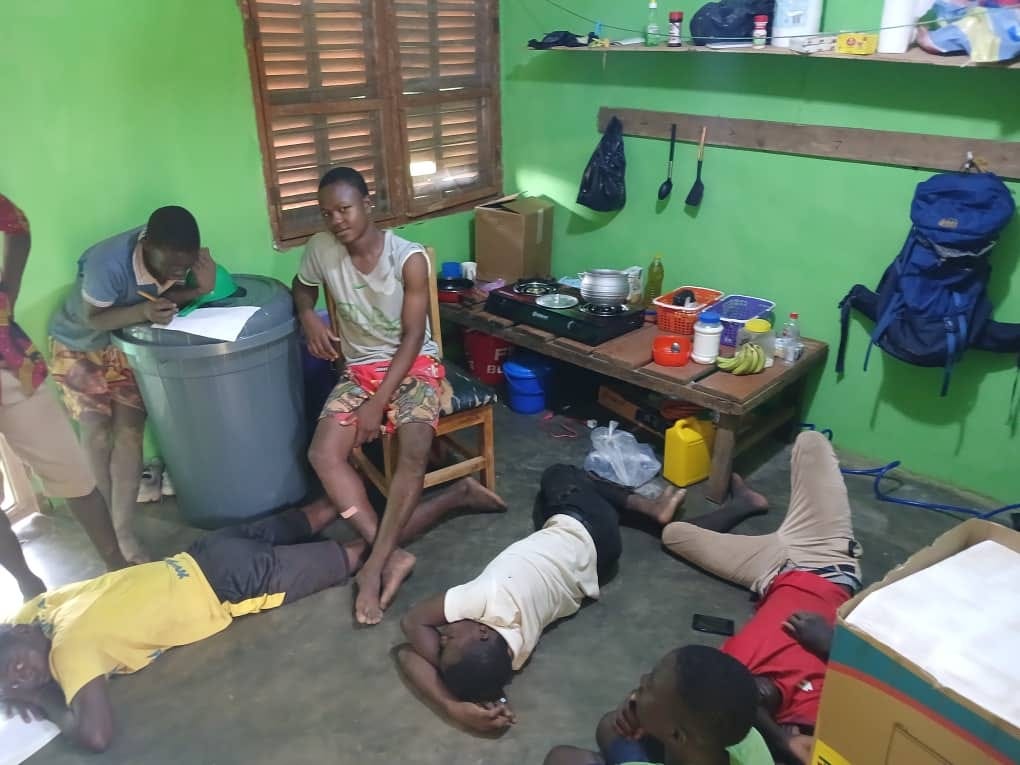
While I've encountered my fair share of challenges since moving to Ghana, I find genuine happiness in my current situation. Life has gradually become normal, and it's only when I take a moment to reflect on my life in the U.S. that it all feels somewhat unfamiliar. One of the most important realizations I've had is that day-to-day life can become ordinary no matter where you are. Even the children running up to me with big smiles, shouting "siliminga! siliminga!" (meaning "white man!") have become a part of my normal experience.
As I continue to settle in and adapt to my new home, I want to establish a more structured routine and utilize my free time more productively. Currently, I tend to spend my limited free time either taking naps or watching movies. Fortunately, Nathan brought a hard drive full of movies with him, which I've downloaded for myself. During homestay, I went on a small Quentin Tarantino film spree, watching "Inglorious Bastards," "Kill Bill Vol. 2," and "Once Upon a Time in Hollywood." Presently, I'm enjoying the "Pirates of the Caribbean" pentalogy. Hopefully, in the future, I'll have the time and energy to write more and finish the books I brought from home.
I miss all of you—my friends and family—tremendously and love any communication from you. I look forward to the day when I can reunite with you all, whether it's back in the U.S. or when you come to visit me here! Unfortunately, my U.S. phone is no longer functioning, so the best way to reach me is through WhatsApp using my Ghanaian number: 233 53 281 0165.
Love,
Conal
This was so wonderful to read Conal. Immensely proud of you, miss you so much, and can't wait to read more!
Lovely post, thanks for sharing. Can't wait to visit.